Solar panel cleaning in South East Melbourne.
Purified deionised water, no detergents, nothing abrasive. We clean the array, inspect the panels and mounting hardware while we're up there, and send you the photographs and findings within 24 hours.
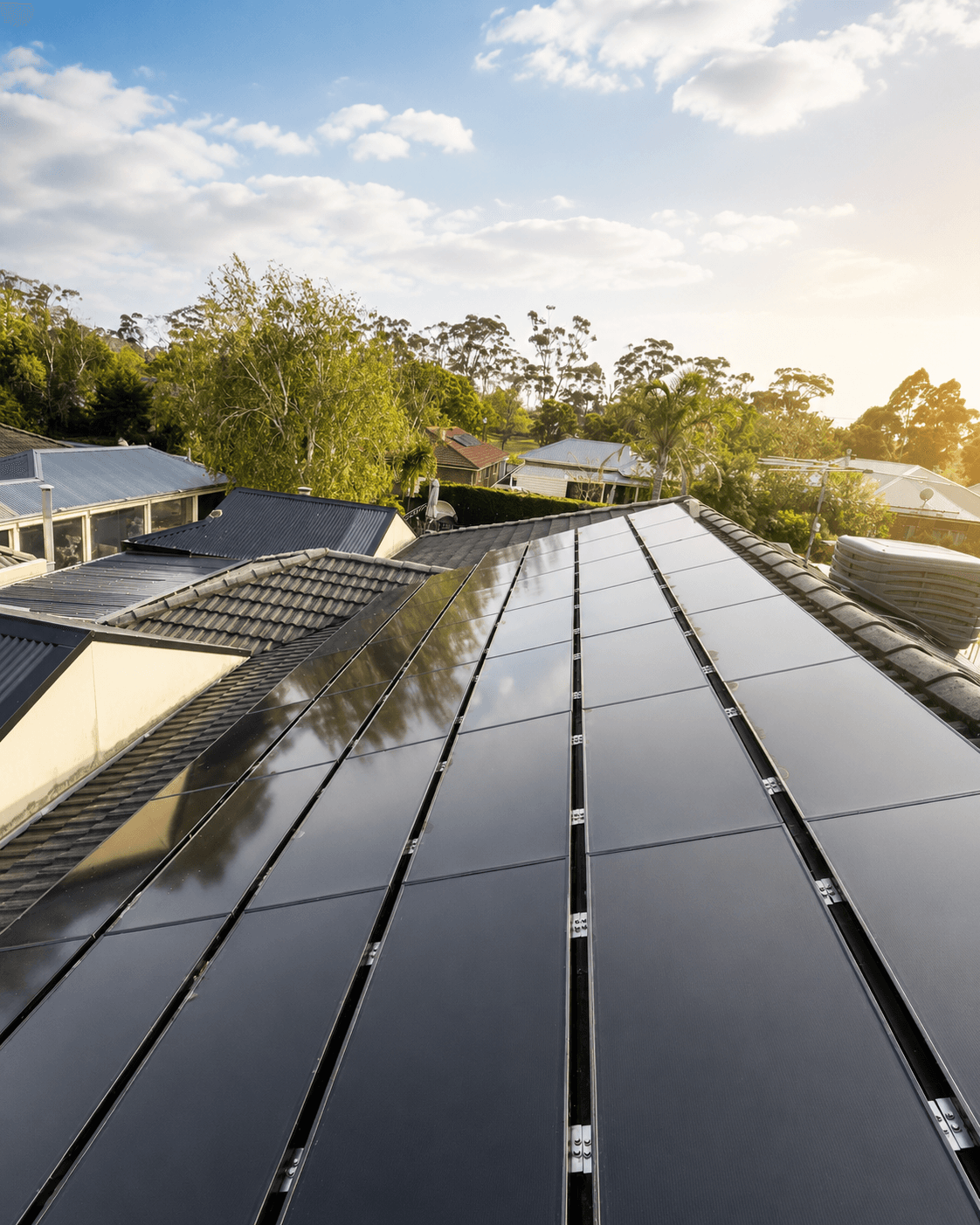
A clean and an inspection, in the same visit.
Your panels are the part of the property you can least easily check. Someone is already up there with a clear view of the array — it would be a waste not to look properly.
So every clean doubles as a documented inspection of the panels, their framing and their fixings.
- Soft-wash using purified deionised water
- Removal of bird fouling, pollen, and deposits
- Panel framing and mounting hardware inspection
- Physical damage check — cracking and delamination
- Wiring access point condition check
- Shading assessment if applicable
- Before and after photographs of the array
- Property Care Record delivered within 24 hours
Deionised water. No detergents.
Solar glass has a coating on it, and that coating is what most cleaning methods quietly damage. Detergents leave residue that attracts more soiling. Abrasives scratch. High pressure risks forcing water past seals. Deionised water avoids all three.
No mineral spotting
Deionised water carries no dissolved minerals, so it dries without the white spotting ordinary tap water leaves on glass.
No chemical residue
Nothing is left on the panel surface for dust to bond to, so the array stays cleaner for longer after the visit.
Low pressure, soft wash
Panels and seals are cleaned at safe pressure with soft equipment — no abrasion, no forcing water where it should not go.
It's rarely the dust. It's what the dust hides.
Rain handles loose dust reasonably well. The losses worth caring about come from the things rain doesn't shift — and from problems that only become visible once the glass is clean.
Bird fouling
Opaque, stubborn, and it does not rinse off. A small heavily soiled patch can drag on performance well out of proportion to its size.
Lichen and edge film
Builds along the lower edge of each panel where runoff evaporates. Slow, easy to miss from the ground, and progressively harder to remove.
Pollen and farm dust
Bonds to glass in a dry stretch rather than washing away. Properties near open land and unsealed roads soil noticeably faster.
Faults hiding under it
Cracking, delamination and loose mounting hardware are invisible under soiling. Cleaning the array is what makes an inspection possible.
We don't quote a headline recovery percentage, because the honest answer is that it depends entirely on what was on your panels to begin with. The before-and-after photographs in your report show you exactly that.
If you're doing it yourself, do it safely.
Plenty of people clean their own panels and that's a reasonable choice. But roof work is genuinely one of the more dangerous things you can do around a house, and there are a few ways to damage an array without realising.
If you take one thing from this page and never call us, take this: go up early in the morning, or don't go up at all.
Four ways it goes wrong
- Cold water on hot panels — thermal shock can crack glass. Clean early while they are cool.
- Tap water dries with mineral spotting, which is worse for output than the dust you removed.
- Abrasive pads and household detergents damage the anti-reflective coating and can void warranty cover.
- High pressure can force water past panel seals and into junction boxes.
How often?
Every 6 to 12 months for most properties here, depending on location and soiling rate. Near trees, farmland, unsealed roads or regular bird traffic, sit at the shorter end.
What it costs.
Starts at $300 for a standard single-storey system.
Array size, roof height and pitch, access, and how heavily soiled the panels are move it from there. We quote a fixed price up front — we've written the full breakdown separately.
Read the solar panel cleaning cost guide →Homeowners
A clean array and a documented check of the hardware you paid a lot for and can never see properly from the ground.
New-Build Estates
Recent installs across Officer, Clyde North and Pakenham still collect construction dust in their first years — worth clearing before it bonds.
Strata & Multi-Residential
Common-property arrays cleaned and documented in a format that works for meeting packs and compliance files.
Commercial
Larger rooftop arrays cleaned systematically, with an inspection record aligned to facility maintenance requirements.
Solar panel cleaning across South East Melbourne.
We work through the Cardinia and Casey corridors — an area with a lot of recently built homes and a lot of rooftop solar. If you are just outside these suburbs, ask.
Also servicing Beaconsfield, Clyde, Cranbourne East, Cranbourne North, Hallam, Hampton Park, Nar Nar Goon, Narre Warren and Narre Warren South.
Solar cleaning questions we get asked.
Does cleaning solar panels actually increase output?
It depends entirely on how dirty they were. A lightly dusted array in a wet month has little to recover. An array with bird fouling, lichen or a heavy pollen film can be losing a meaningful amount, because even a small opaque patch can drag down the whole string it sits in. We photograph before and after so you can see what was actually on your panels rather than take a number on faith.
How often should solar panels be cleaned?
Every 6 to 12 months suits most South East Melbourne properties, depending on your location and how fast the panels soil. Properties near trees, farmland, unsealed roads or with regular bird traffic sit at the shorter end. If your inverter app shows output drifting down over a season with no other explanation, that is worth a look.
What do you use to clean them?
Purified deionised water and a soft-wash method — no detergents and nothing abrasive. Deionised water carries no dissolved minerals, so it lifts soiling and dries without leaving the spotting that ordinary tap water leaves behind on glass.
Doesn't rain clean them anyway?
Rain rinses loose dust, which is why soiling is usually worse through a dry stretch. What rain does not shift is bird fouling, lichen, sap, pollen bonded to the glass, or the film that builds up along the lower edge of each panel where water runs off and evaporates.
Will cleaning void my warranty?
Panel warranties commonly exclude damage from abrasives, harsh chemicals and high-pressure water, which is exactly why we use a soft-wash deionised method instead. Warranty terms vary by manufacturer, so check your own documentation — and if it specifies a particular cleaning method, tell us and we will work to it.
Can I just clean them myself with a hose?
It is your roof and your call, but three things go wrong. Roof work causes serious falls. Tap water leaves mineral spotting as it dries. And spraying cold water onto panels that have been in full sun risks thermal shock. If you do it yourself, do it early in the morning while the panels are cool.
Do you inspect the panels while you are up there?
Yes, and it is half the point. We check panel framing and mounting hardware, look for cracking and delamination, check the condition of wiring access points, and assess shading where relevant. Anything we find is photographed and flagged in your Property Care Record.
Do you clean commercial solar installations?
Yes. We work across residential, strata and commercial rooftops. On larger arrays the documented inspection record tends to matter as much as the clean, since it feeds maintenance and compliance files.
Also offering gutter cleaning, pressure & soft washing and window & façade cleaning.
All services →Protect your property
with confidence.
Every visit includes professional workmanship, before-and-after documentation, and your Clearline Property Care Record. Whether it's a one-off service or ongoing maintenance, the process is the same.